 23 November 2026, 12:05:10 GMT
 Post by: Manu Sareen
A clean office is noticed most when something goes wrong
Most people do not give much thought to the cleaning in their office when everything is working as it should. The reception is ready for the first visitors, meeting rooms are clean before the morning calls begin, kitchens are usable and washrooms have what people need. It is usually when something has been missed that cleaning suddenly becomes a talking point.
For facilities managers and business owners, these issues are rarely isolated incidents. An empty soap dispenser, an overlooked floor or an untidy meeting room can indicate gaps in the way a cleaning service is planned and monitored. In a busy London workplace, maintaining standards requires more than responding to individual complaints. It requires clear responsibilities, appropriate cleaning schedules and management oversight that keeps the service consistent.
From our experience in commercial cleaning, we believe the effectiveness of a service depends on how well it is organised around the building and the people who use it.
That is why we believe a good office cleaning service is about more than getting through a checklist. The work needs to fit the building, the people who use it and the way the business operates. It also needs someone taking responsibility for the overall service: planning the work, supporting the cleaning team, checking standards and dealing with issues when they arise.
At Green Facilities, our management team brings more than 20 years of experience in commercial cleaning. We work across offices and a range of other commercial environments, including retail premises, hotels, pubs and clubs, gyms and health clubs. Each setting has its own demands. Even two offices on the same street can need quite different cleaning arrangements, depending on occupancy, layout, access and opening hours.
What makes office cleaning in London different?
London offices are not all alike. A corporate building in Canary Wharf may have several floors, controlled access and a busy reception. A smaller office near Whitechapel might share a kitchen or entrance with other businesses. In the City, security procedures, visitor traffic and the demands of professional services firms can all influence when and how cleaning takes place.
One of the first things we consider when planning an office cleaning service is how the premises are actually used. A cleaning arrangement that works for a multi-floor corporate office may not be suitable for a smaller shared workplace. Occupancy, access restrictions, visitor activity and the use of communal facilities all influence how the service should be organised.
We believe the cleaning specification should be developed around these practical requirements rather than relying on a standard schedule. This gives both the client and cleaning team a clearer understanding of the expected work, responsibilities and service standards.
The details that make a cleaning contract work
Keeping standards consistent across several floors
In a multi-floor office, it is easy for standards to vary. One floor may be busy from early morning, another may be used mainly for meetings, while a third has a kitchen that sees constant use. A single building-wide checklist can overlook those differences.
In our view, an effective cleaning specification needs to go beyond listing general duties. It should identify the requirements of individual floors, shared spaces and facilities, making it clear which tasks are expected and who is responsible for them.
Management oversight is equally important. Site inspections and communication with the cleaning team help identify areas that may need attention and ensure that agreed actions are followed up. This is particularly relevant in larger workplaces where maintaining consistent standards requires coordination across different areas of the building.
Cleaning around hot desking and shared workspaces
Hot desking means the same workstation or meeting room may be used by several people in a day. Desks, chair arms, tables and shared touchpoints can therefore need a different approach from a traditional office where people have their own space.
The cleaning schedule should reflect how the workplace is actually used. It should identify which areas need attention, when the team can access them and how cleaning can be carried out without interrupting meetings or employees. Timing matters just as much as the task itself.
Washrooms: cleanliness and replenishment go together
A washroom can be clean at the start of the day and still fall below expectations a few hours later if soap or paper products have run out. In buildings with high occupancy or regular visitors, replenishment needs to be treated as part of the service rather than an occasional extra.
The contract should make clear which consumables are included, who checks stock levels and how often facilities are inspected. Those arrangements may need to change as occupancy patterns change. It is a straightforward detail, but one that has a noticeable effect on the experience of people using the building.
Reception areas need to stay presentable throughout the day
Reception is often the first part of an office a visitor sees. It also tends to collect the effects of daily footfall: marks on entrance floors, fingerprints on glass, dirt brought in from outside and general wear around seating and waiting areas.
For some buildings, an early clean will be enough. Others may need a further check or a quick touch-up during the day, particularly when visitor numbers are high. The right arrangement should be agreed after looking at the site, not assumed in advance.
A reliable team needs clear support and accountability
A cleaning specification is only useful if the people delivering it understand the building and have the support to do the job properly. That means clear site instructions, suitable equipment and products, an understanding of access and security arrangements, and a way to raise problems when a task cannot be completed as planned.
We believe clients should have a clear point of contact throughout the cleaning contract. When an issue arises, there should be an established process for reporting it, assigning responsibility and confirming that the necessary action has been taken.
At Green Facilities, dedicated account management, customer support and regular site audits form part of our approach to service oversight. These arrangements help maintain communication between clients, management and cleaning teams while keeping responsibilities clear.
Getting the start of a contract right
The first few weeks of a new cleaning contract can set the tone for the relationship. If staff do not have the right access, site instructions are incomplete or equipment has not arrived, the service can start with avoidable problems.
Before the first shift, the cleaning provider and client should agree on the specification, working hours, staffing arrangements, site inductions, security requirements, equipment and products. It should also be clear who is responsible for each part of the handover and how any early issues will be escalated.
Green Facilities' mobilisation process includes coordinating staffing, inductions, access, equipment and cleaning schedules ahead of the service going live. Once the contract is underway, site checks and regular communication help keep the arrangements under review as the building's needs evolve.
Quality should be checked, not simply promised
In commercial cleaning, service quality should be monitored as part of normal operations rather than reviewed only after a client raises a concern. A cleaning specification establishes the expected standard, but management processes are needed to check whether that standard is being maintained.
We consider regular inspections, clear communication with cleaning teams and appropriate follow-up to be important parts of a well-managed cleaning contract.
Responsible products, safer working and sustainability
Choosing cleaning products is not simply a matter of selecting the strongest solution. Products need to be suitable for the surface and task, appropriate for the working environment and used in line with the relevant safety information. Teams also need to understand correct handling, storage and dilution.
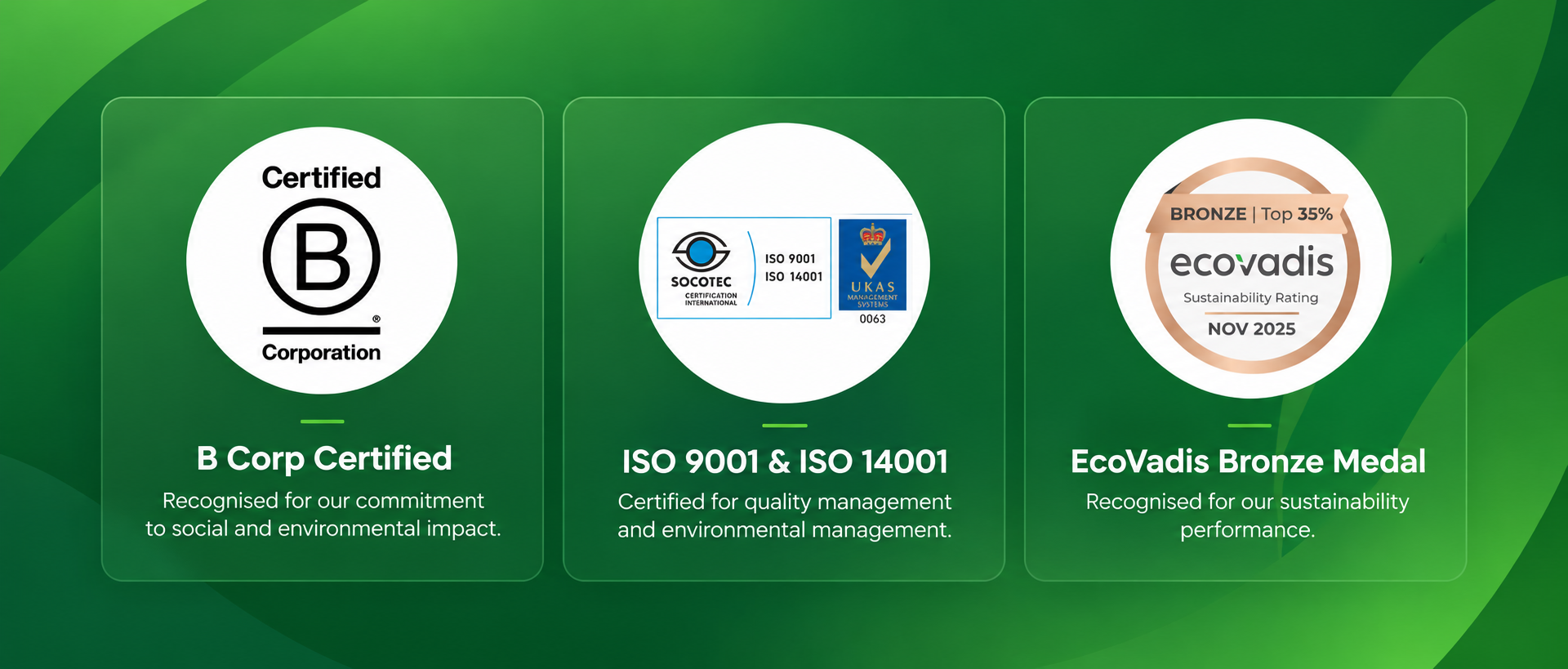
Green Facilities holds ISO 14001 certification for environmental management and ISO 45001 certification for occupational health and safety. We are also a Certified cleaners B Corporation and hold an EcoVadis Bronze sustainability rating. These credentials are part of our wider approach to responsible business; they should be reflected in everyday decisions around product selection, resource use, waste and safe working practices.
Our staff receive COSHH training for the safe handling and use of cleaning substances. For clients, this matters because environmental responsibility and workplace safety should be built into the way a contract is delivered, not added as an afterthought.
Working across Canary Wharf, Whitechapel and the City
The same fundamentals apply across London, but local buildings and working patterns influence how a cleaning service should be planned.
Office cleaning in Canary Wharf
Canary Wharf is known for its large commercial buildings and busy professional workplaces. Many sites have multiple floors, visitor-facing reception areas, meeting suites and shared facilities. Cleaning needs to be organised around building access, occupancy and the times when different spaces are in use. Consistency across the whole building is just as important as the appearance of the main reception.
You can find more detail about our office cleaning services in Canary Wharf E14 and the local areas covered.
Commercial cleaning in Whitechapel
Whitechapel has a varied commercial mix, from professional offices to smaller workplaces and premises within shared or converted buildings. In these settings, the practical details can make a real difference: who uses the communal kitchen, how shared entrances are maintained and when cleaners can access the premises without disrupting the working day.
Our commercial cleaning services in Whitechapel E1 page explains our local coverage, including nearby areas such as Aldgate, Spitalfields, Shadwell, Stepney, Wapping and St Katharine Docks.
Office cleaning in the City of London
The City brings together financial organisations, legal practices, professional services firms and a wide range of commercial premises. Some buildings have detailed access and security procedures; others have several businesses sharing facilities. A well-planned service needs to account for those arrangements, set out responsibilities clearly and make sure standards are checked across all areas.
Read more about our office cleaning services in the City of London EC1–EC4 and the surrounding business districts.
Choosing an office cleaning company in London
When comparing office cleaning companies, the lowest quotation does not always represent the best value. It is worth understanding what is included, who will manage the contract and how the provider will respond if the building's needs change. Before making a decision, ask:
- Will the cleaning specification be based on a visit to our premises?
- Are tasks and frequencies clearly set out for each floor and shared area?
- How will the provider manage staffing, inductions and building access?
- Who is the day-to-day management contact if we need to raise an issue?
- How often are site inspections carried out, and how are actions followed up?
- What quality, environmental and health and safety standards does the company hold?
- Can the service be adjusted when occupancy, opening hours or business requirements change?
The answers should give you a clearer picture of how the service will work after the contract has been signed. A dependable cleaning partner should be able to explain not only what its team will clean, but how the work will be organised and monitored.
How much do office cleaning services in London cost?
There is no single rate that suits every London office. The cost depends on the size and layout of the premises, the number of cleaning visits, hours required, facilities included, floor types, access arrangements and whether periodic or specialist work is needed.
A site visit is the best way to establish the scope properly. It gives the cleaning company an opportunity to understand the building and agree the required standard and frequency with you. It also makes quotations easier to compare, because you can check that each provider is pricing the same work.
A cleaning service that is properly managed
Office cleaning is not simply about how a workplace looks immediately after the cleaning team has finished. It is about how effectively the service is organised, whether cleaning teams understand their responsibilities and how consistently agreed standards are maintained throughout the working week.
At Green Facilities, we bring together commercial cleaning management experience, dedicated account support, regular site audits and recognised standards for quality, environmental management and health and safety. We believe each cleaning programme should reflect the individual requirements of the premises rather than rely on a one-size-fits-all approach.
Whether you manage a corporate office in Canary Wharf, a shared workplace in Whitechapel or a multi-floor building in the City, we would be pleased to understand what your site needs. If you are reviewing your current cleaning arrangements or appointing a new office cleaning company in London, speak to Green Facilities about arranging a site visit and discussing a proposal.